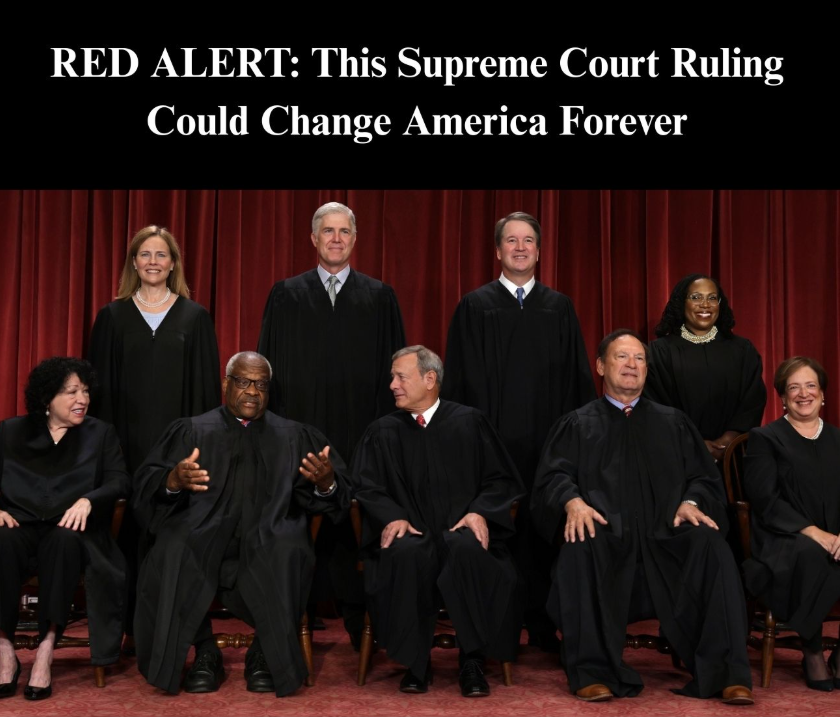

In a landmark move, the U.S. Supreme Court announced Friday it will hear arguments on the constitutionality of President Donald Trump’s executive order ending birthright citizenship — one of the most consequential immigration cases to reach the high court in decades.
The justices agreed to take up the issue after a string of lower court rulings blocked the Trump administration from enforcing the order, which declares that children born on U.S. soil to noncitizen parents who are either in the country illegally or only temporarily are not entitled to automatic U.S. citizenship.
Trump issued the directive on his first day back in office in January, calling it a necessary correction to what he described as a “century-long misreading” of the 14th Amendment. The order argued that the Constitution’s Citizenship Clause has been “grossly distorted by activist judges and bureaucrats” to grant citizenship to so-called “anchor babies” born to parents without lawful status.
“It is the policy of the United States that no department or agency of the government shall issue or recognize documents purporting to confer U.S. citizenship to a person whose mother was unlawfully present in the United States and whose father was not a U.S. citizen or lawful permanent resident at the time of that person’s birth,” the order states.
Trump’s Justice Department maintains that the phrase “subject to the jurisdiction thereof” in the 14th Amendment excludes children of foreign nationals who owe allegiance to another government or who are in the U.S. illegally.
“The Fourteenth Amendment has never been interpreted to extend citizenship universally to everyone born within the United States,” the order said. “It has always excluded from birthright citizenship persons who were born in the United States but not subject to the jurisdiction thereof.”
The administration’s stance directly challenges the 1898 Supreme Court ruling in United States v. Wong Kim Ark, which held that a child born in the United States to foreign parents legally residing in the country was a citizen at birth. That case has long been cited as the definitive interpretation of the Citizenship Clause, though Trump’s legal team argues the precedent does not apply to those in the country unlawfully.
Since Trump signed the order, federal courts across the country have issued injunctions halting its enforcement. In February, U.S. District Judge Leo Sorokin, an Obama appointee in Massachusetts, blocked the policy, writing that stripping babies of citizenship “even if temporary and later restored, can likely leave permanent scars.” Earlier, Judge John Coughenour, a Reagan appointee in Seattle, had issued a nationwide injunction as well.
Democratic attorneys general from several states sued to overturn the order, arguing that it violates both the text and history of the 14th Amendment, which declares, “All persons born or naturalized in the United States, and subject to the jurisdiction thereof, are citizens of the United States.”
Solicitor General D. John Sauer urged the Court to take the case, calling the long-held interpretation of the Citizenship Clause “a mistaken view that has produced destructive consequences.” He argued that granting automatic citizenship to children of those in the country unlawfully “erodes national sovereignty and rewards illegal entry.”
The administration’s appeal comes after a New Hampshire district court certified a nationwide class of plaintiffs representing babies and families affected by the order. That court found Trump’s policy “likely unconstitutional” and barred its enforcement while litigation proceeds.
The high court also declined to immediately act on a related appeal from four states — Washington, Arizona, Illinois, and Oregon — where a divided 9th Circuit panel in July ruled against the administration.
Arguments are expected early next year, with a decision likely by late June or early July — setting up a potentially explosive ruling in the middle of the 2026 election season.
If upheld, Trump’s executive order would mark the most sweeping change to U.S. citizenship law since Reconstruction, effectively ending automatic citizenship for the children of illegal immigrants and temporary visitors.