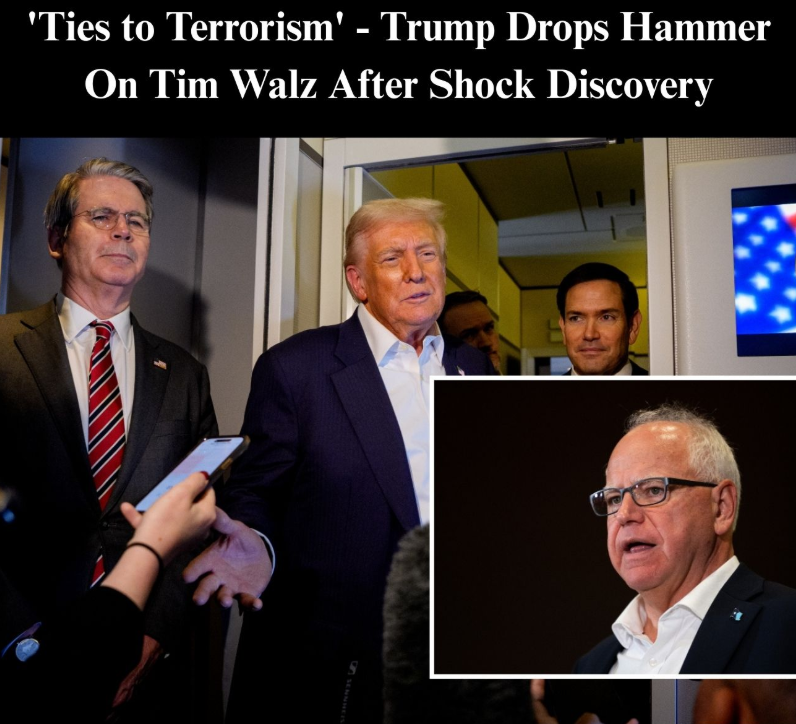

Treasury Secretary Scott Bessent said Friday it is possible Minnesota taxpayer dollars were diverted to the Somali-based terrorist group al-Shabab and blamed Democratic Gov. Tim Walz for what he described as a lack of oversight as multiple fraud investigations unfold in the state. Bessent said the Treasury Department’s Financial Crimes Enforcement Network is investigating whether money service businesses were used to funnel funds overseas, Fox News reported.
He did not name the financial institutions believed to be involved. “We are thoroughly investigating the fraud, including funds sent to Somalia through money service businesses, which provide financial services outside of a formal bank,” Bessent said during a virtual press conference.
“These funds could have potentially been diverted to the terrorist organization al-Shabab,” he said. “We have traced where the money went and are examining that.”
“These businesses had an obligation to comply with anti-money laundering laws, and they will be held responsible for any crimes they committed,” Bessent said.
In December 2025, Bessent announced the Treasury was leading an investigation into whether Minnesota funds were diverted to al-Shabab.
More than 75 people have been charged in connection with alleged fraud schemes tied to Minnesota’s social services system, according to federal officials.
Bessent has previously said a significant portion of the funds obtained through the alleged schemes were transferred overseas.
Bessent said Friday that the Internal Revenue Service’s civil enforcement division is auditing financial institutions suspected of facilitating the laundering of Minnesota funds.
He said the IRS plans to announce the formation of a task force to investigate fraud involving pandemic-era tax incentives and the misuse of 501(c)(3) tax-exempt status by entities implicated in Minnesota-based social services fraud.
Bessent also said Treasury officials are providing training to Minnesota law enforcement on how to use financial data, including suspicious activity reports, to combat fraud.
Bessent blamed Walz for failing to properly oversee state funds.
“It’s clear that Governor Walz has been negligent in his fiduciary duties as chief executive of the state of Minnesota that this would happen on his watch,” Bessent said.
“We are actively pursuing all leads to see the level of involvement, whether it’s limited to negligence and incompetence or something more than that,” he said.
“We do not know the depth, breadth, and collusion in this financial calamity that Governor Walz has allowed to happen,” Bessent said. “Was this directed from overseas, or was it allowed to flourish right here in Minnesota. We will find out.”
Walz’s office did not immediately respond to a request for comment.
Walz has previously disputed reports suggesting the fraud could total more than $9 billion, calling such claims exaggerated and sensationalized.
“I am accountable for this, and more importantly, I am the one that will fix it,” Walz told reporters in December.
Walz, who announced this week he will not seek re-election, has faced mounting criticism from Republicans and President Donald Trump, who has labeled Minnesota a hub of fraudulent money laundering activity.
Lawmakers are also investigating the alleged $250 million “Feeding Our Future” fraud scheme, which targeted a federally funded children’s nutrition program administered by Minnesota during the COVID-19 pandemic.
At least 77 people have been charged in that case.
Federal authorities are also probing alleged fraud tied to Minnesota’s Housing Stability Services Program, which provides Medicaid-funded housing assistance for vulnerable populations.
Fewer than a dozen people have been charged so far in that case, but additional charges are expected.