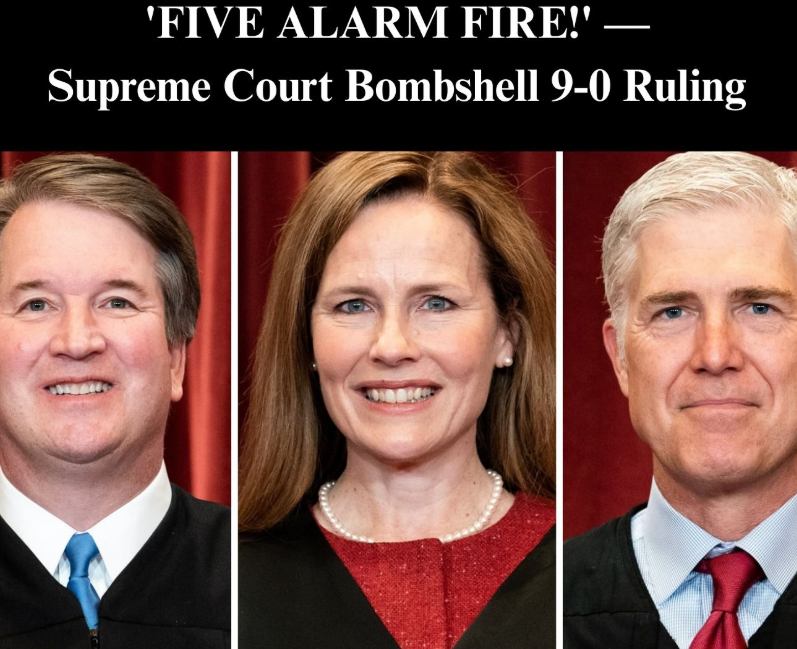
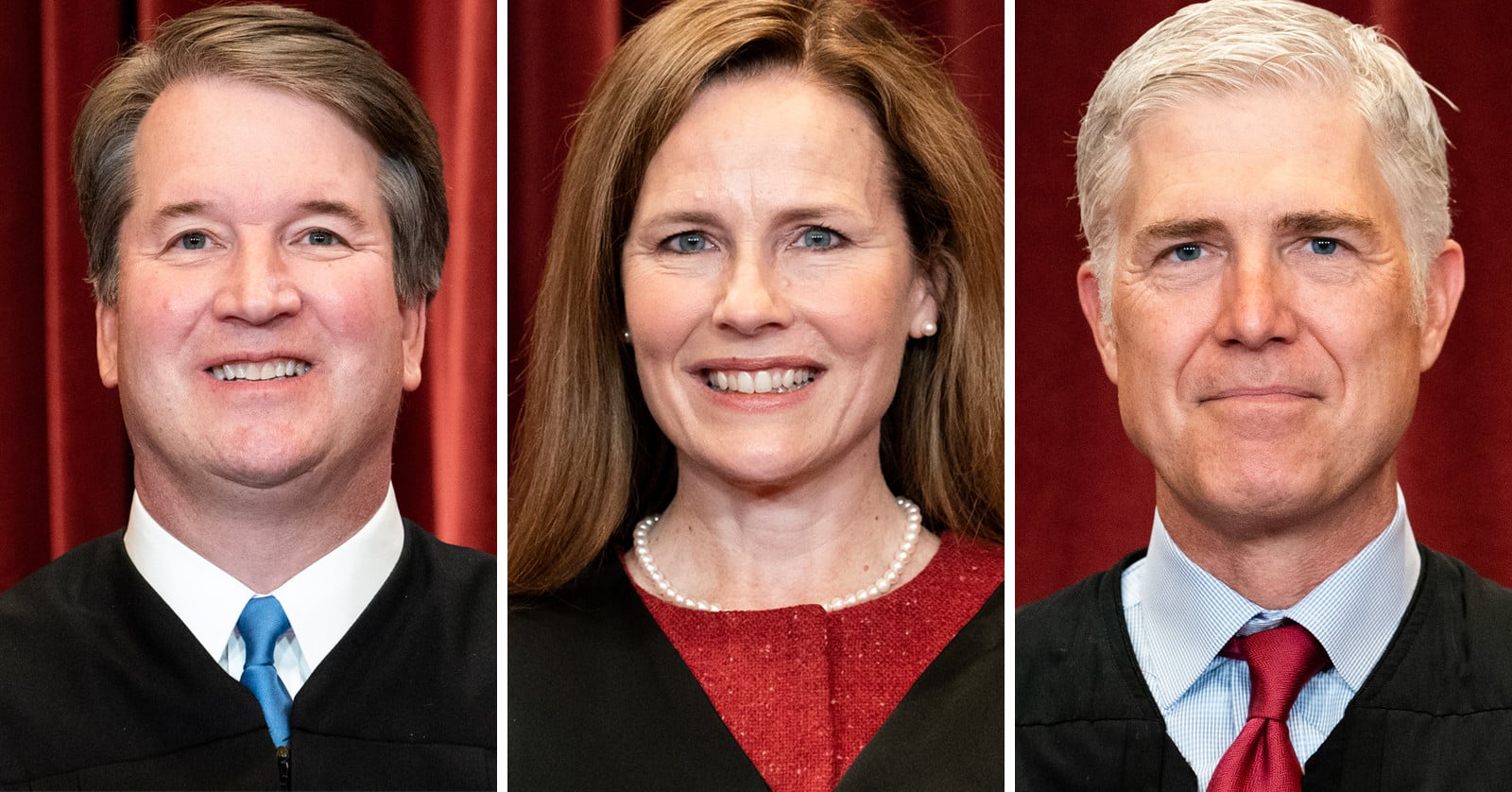
The U.S. Supreme Court unanimously ruled Tuesday that federal courts must apply a time limit when a party seeks to challenge a judgment as void under federal procedural rules, settling a long-running dispute among lower courts.
In Coney Island Auto Parts Unlimited Inc. v. Burton, the justices affirmed the U.S. Court of Appeals for the Sixth Circuit’s 2024 decision, holding that Federal Rule of Civil Procedure 60(c)(1) requires motions to vacate even allegedly void judgments to be filed within a “reasonable time.”
The case arose after Coney Island Auto Parts, a Brooklyn-area company, sought to overturn a default judgment entered against it in 2015 on the ground that it was never properly served. The bankruptcy court and federal district court denied the challenge on timeliness grounds, a ruling the Sixth Circuit upheld.
Justice Samuel Alito, writing for the court, emphasized that the plain text of Rule 60(c)(1) — which states that a motion under Rule 60(b) must be made within a reasonable time — applies to motions asserting that a judgment is void. Under the court’s interpretation, the rule’s structure and language foreclose treating void judgments as exempt from timing requirements.
The decision resolves a split among federal appeals courts, with most circuits having held that no time limit applies to void judgment challenges because such judgments are legally null from the start, and only a minority circuit like the Sixth required prompt action.
Justice Ketanji Brown Jackson noted during oral arguments that determining whether a judgment is truly void can be complex, and the court’s ruling leaves procedural mechanisms in place to balance finality with fairness.
The ruling is expected to influence civil litigation practice nationwide by reinforcing procedural deadlines for reopening final judgments, even when jurisdictional defects are alleged.
Treasury Secretary Scott Bessent said it is “very unlikely” the Supreme Court will overturn President Donald Trump’s use of emergency powers to impose tariffs, with a ruling possibly coming as soon as this week.
“I believe that it is very unlikely that the Supreme Court will overrule a president’s signature economic policy,” Bessent said during an appearance on Meet the Press. “They did not overrule Obamacare. I believe that the Supreme Court does not want to create chaos.”
Last month, the Supreme Court upheld a key provision of the Affordable Care Act that allows a federal panel to recommend preventive services insurers must cover at no cost to patients, CNBC reported.
Bessent’s remarks came one day after Trump announced plans to impose a new round of tariffs on European goods until what he described as “a Deal is reached for the Complete and Total purchase of Greenland.”
Trump did not specify which statute he is invoking, though the move mirrors prior “liberation day” tariffs imposed under the International Emergency Economic Powers Act, or IEEPA.
Trump said tariffs on goods from Denmark, Norway, Sweden, France, Germany, the United Kingdom, the Netherlands, and Finland will begin at 10 percent on Feb. 1 and rise to 25 percent on June 1.
He argued that only the United States has the resources and strategic reach to secure the island and counter growing geopolitical threats in the Arctic.
“We have subsidized Denmark, and all of the Countries of the European Union, and others, for many years by not charging them Tariffs, or any other forms of remuneration,” Trump wrote. “Now, after centuries, it is time for Denmark to give back.”
The tariffs will apply not only to Denmark but also to Finland, France, Germany, the Netherlands, Norway, Sweden, and the United Kingdom, all of which have pledged to deploy military forces to Greenland in support of Danish sovereignty.
Trump said those actions have dangerously escalated tensions.
“This is a very dangerous situation for the safety, security, and survival of our planet,” he wrote. “These countries have put a level of risk in play that is not tenable or sustainable.”