
The U.S. Supreme Court turned down an appeal from John Nassif, a Florida man who was found guilty of taking part in the January 6, 2021, attack on the U.S. Capitol.
Nassif argued that a law that makes “parading, picketing, and demonstrating” inside the Capitol unconstitutional because it goes against the First Amendment’s protections of free speech and assembly. The charge is one of the most common ones used against people who were involved in the January 6 attack.
The 57-year-old defendant was found guilty of several misdemeanors, including disorderly conduct and violent entry, and was given a seven-month prison sentence. At first, prosecutors wanted the judge to give the defendant a sentence of 10 to 16 months.
Nassif’s public defenders said that he went into the Capitol almost an hour after it was broken into and only stayed for less than 10 minutes, during which time he did what they called “core First Amendment expression” that “in no way disrupted” things.
The U.S. Court of Appeals for the D.C. Circuit and other lower courts turned down Nassif’s arguments. A panel of three judges decided that the Capitol buildings are not a public space where protests can happen. This means that the government can set reasonable and neutral rules to keep order and safety.
The panel said, “Nassif has not shown that the Capitol buildings are, by policy or practice, generally open for use by members of the public to voice whatever concerns they may have — much less to use for protests, pickets, or demonstrations.”
Nassif’s petition brought attention to a disagreement between the D.C. Circuit and the D.C. Court of Appeals about whether the Capitol is a public forum. The D.C. Circuit has said that the Capitol buildings are not public forums, which means that more restrictions can be put in place. However, the D.C. Court of Appeals has said that some areas, like the Capitol Rotunda, are public forums where speech restrictions must be very specific.
U.S. District Judge John Bates had already upheld the charge against Nassif for parading, saying that there are already established rules that allow for reasonable limits on First Amendment activities in the Capitol. The government says that these kinds of limits are needed to keep congressional proceedings from being disrupted and to protect the safety of the legislative process.
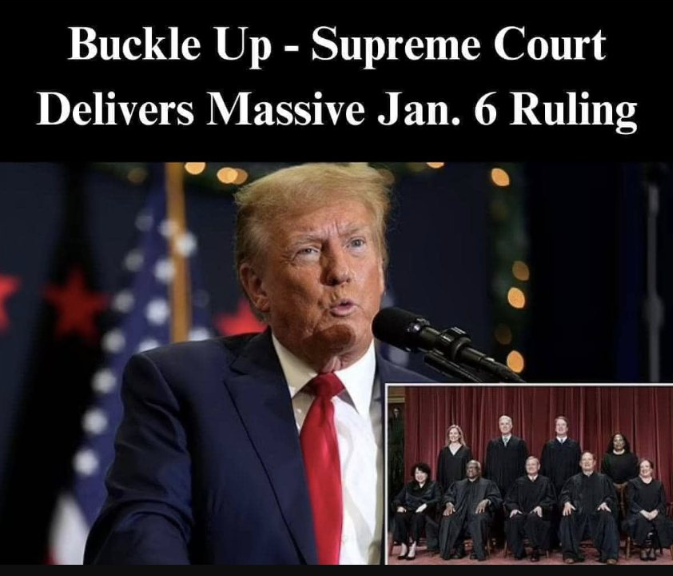
The Supreme Court’s decision not to hear the case means that the lower court’s ruling stands, which means that the government can still charge people with violating the parading statute. According to the Department of Justice, this decision has big effects on the more than 460 defendants charged with the same misdemeanor related to the January 6 riot. This is the most common charge among the more than 1,450 people who have been prosecuted so far.
The last case the justices decided about the riot was United States v. Fischer.
In that case, the court limited the scope of Section 1512(c)(2) of the obstruction statute, which had been used against more than 120 defendants, making it harder for the prosecution to prove its case.
In the case of United States v. DeCarlo, U.S. District Judge Beryl Howell made a similar decision on November 1, raising the bar for the obstruction charge. The Examiner said that this decision makes it seem like the DOJ might have a hard time successfully using that charge in any other January 6 cases.
The Examiner said that it is still not clear how many Jan. 6 defendants Trump plans to pardon or how far he plans to go with it. Trump has said before, “I am likely to forgive many of them.” I can’t say for sure about all of them because some of them probably went too far.
Almost 600 people are being charged with assaulting, resisting, or getting in the way of police officers, and more arrests are still being made.
Stewart Rhodes, the founder of the Oath Keepers, and Enrique Tarrio, the leader of the Proud Boys, are two of the defendants who have gotten the longest sentences. They weren’t charged with directly taking part in violence inside the Capitol, but they were found guilty of seditious conspiracy and other felonies for planning the riot.