President Donald Trump signed a $1.2 trillion spending package late Tuesday, ending a weeklong partial government shutdown. This legislation restores funding for most federal agencies through September, but crucially, the Department of Homeland Security (DHS) is funded only until February 13. This establishes a tight 10-day deadline for lawmakers to reach a longer-term deal on immigration and border security, aiming to avert another lapse in DHS operations.
The bill’s passage, by a narrow 217–214 House margin, followed intense negotiations and exposed deep divisions within the Republican Party. Twenty-one House Republicans opposed the measure, arguing it failed to deliver on core GOP priorities like full-year DHS funding and election integrity. Conversely, 21 Democrats provided crucial votes for passage. President Trump justified his signature by emphasizing the need to prevent further economic harm and keep federal services running, stating, “We cannot have another long, pointless, and destructive shutdown.”
The package funds major departments, including Education, Transportation, Housing and Urban Development, and Health and Human Services, while deferring contentious immigration enforcement debates. Democrats advocate for new restrictions on Immigration and Customs Enforcement (ICE), demanding body-worn cameras, visible identification, and judicial warrants for arrests. Homeland Security Secretary Kristi Noem confirmed the administration began implementing limited reforms, starting with mandatory body cameras for ICE agents in Minneapolis, with nationwide expansion planned. Noem noted this would expose agent dangers and increase scrutiny.
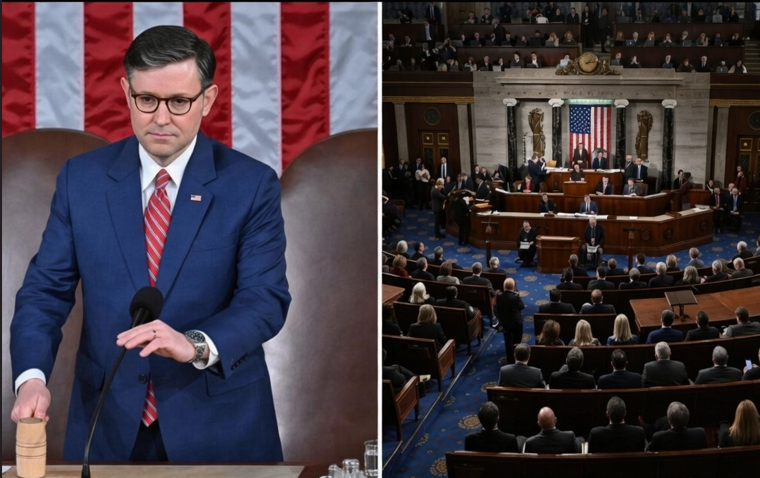
Conservative Republicans opposed the bill, seeking stronger border security and long-term DHS funding. Notable GOP dissenters included Andy Biggs, Lauren Boebert, and Thomas Massie, with Massie criticizing the exclusion of the Safeguard American Voter Eligibility (SAVE) Act and the short “two-week DHS patch.” Speaker Mike Johnson (R-LA) defended the agreement as a necessary compromise to reopen government and maintain leverage, citing substantial prior funding for ICE and CBP via the One Big Beautiful Bill Act.
Despite the immediate resolution, the political battle over long-term DHS funding remains. Democrats, led by House Minority Leader Hakeem Jeffries (D-NY), continue demanding “accountability and transparency” within DHS—especially after recent fatal ICE-involved shootings—before agreeing to a comprehensive funding package. Republicans counter that such restrictions endanger agents and embolden criminal networks. President Trump’s earlier directive to Republicans, “There can be no changes at this time,” was key to the bill’s passage. While federal agencies resume normal operations, contentious issues surrounding border security and immigration enforcement are poised to dominate the legislative agenda soon.