President Donald Trump’s decision to impose a fuel blockade on Cuba is designed to intensify pressure on the island’s communist government, which analysts say is already struggling to maintain stability.
The policy, described by some observers as an “energy quarantine,” is intended to weaken Havana’s leadership by restricting access to fuel supplies that are vital to the country’s economy. However, the impact is being felt most directly by Cuba’s population of roughly 10 million people.
Fuel shortages have worsened an economic crisis that has been developing for decades. Limited energy supplies are disrupting transportation, electricity generation, and water systems, while already severe shortages of food and medicine are becoming more acute.
Sebastián Arcos, interim director of the Cuban Research Institute at Florida International University, said the situation inside the country has grown increasingly dire.
“There’s a number of epidemics rippling through the population right now, repression is increasing as the regime feels cornered, and they are not signaling any willingness to negotiate with the United States,” Arcos said.
Despite the pressure, he cautioned that the Cuban government has historically shown resilience during periods of extreme hardship.
“These people are really, really bad guys, and they have shown this capacity to survive difficult crises,” Arcos added. “I don’t think they can survive this one.”
Trump suggested Friday that the United States might pursue what he described as a “friendly takeover” of Cuba. The concept could resemble Washington’s approach toward Venezuela, where outside pressure and negotiations with military leaders aimed to remove top political figures while maintaining much of the existing power structure in exchange for greater economic cooperation.
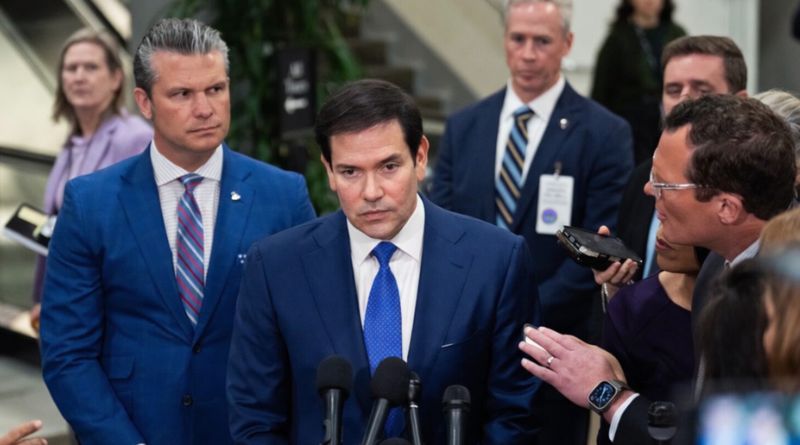
Secretary of State Marco Rubio has been leading the administration’s strategy on Cuba and is reportedly in contact with Raúl Guillermo Rodríguez Castro, the grandson of former Cuban leader Raúl Castro.
Raúl Castro, now 94, remains the de facto leader of the country’s authoritarian government. His grandson serves as his bodyguard and is believed to oversee GAESA, a powerful military-run conglomerate that manages large segments of the Cuban economy.
GAESA controls sectors ranging from tourism to banking and retail, and it is closely tied to Cuba’s armed forces. According to the Miami Herald, the organization held an estimated $18 billion in previously undisclosed assets and bank accounts as of 2024.
Reports indicate that a meeting between Rubio and Rodríguez Castro took place earlier this week during the Caribbean regional conference CARICOM in St. Kitts and Nevis.
Speaking to reporters, Rubio suggested that the United States is not necessarily demanding immediate regime change in Havana.
“Cuba needs to change. It needs to change. And it doesn’t have to change all at once,” Rubio said Wednesday.
The developments come as the United States is also involved in escalating tensions with Iran following a joint military operation carried out with Israel that began Saturday.
White House Press Secretary Karoline Leavitt said that Rubio notified senior congressional leaders ahead of the strikes. The announcement came amid criticism from lawmakers questioning whether Trump authorized the operation without sufficient congressional approval.
“President Trump monitored the situation overnight at Mar-a-Lago alongside members of his national security team,” Leavitt wrote in a statement posted to X. “The President spoke with Prime Minister Netanyahu by phone.”
She added that Rubio contacted the congressional leaders known as the “Gang of Eight” prior to the attacks.
“Secretary Rubio called all members of the Gang of Eight to provide congressional notification, and he was able to reach and brief seven of the eight members,” Leavitt said.
The “Gang of Eight” consists of the majority and minority leaders of both chambers of Congress, along with the chairs and ranking members of the House and Senate intelligence committees. House Speaker Mike Johnson confirmed that the group had been briefed earlier in the week about potential military action.
“The Gang of Eight was briefed in detail earlier this week about potential military action against Iran,” Johnson said, according to The Independent.
Under the National Security Act of 1947, Congress must be kept “fully informed” about significant intelligence activities. However, according to the Harvard Kennedy School, presidents from both parties have generally interpreted the requirement as satisfied when the Gang of Eight is notified rather than the full intelligence committees.
Leavitt’s comments came after criticism from Representative Thomas Massie of Kentucky, who wrote on X that the strikes represented “acts of war unauthorized by Congress.”
Massie and Representative Ro Khanna of California had been preparing legislation that would force a vote next week to restrict the president’s ability to launch military strikes against Iran without formal congressional authorization.
Meanwhile, Rubio announced Friday that Iran had been designated a state sponsor of wrongful detention. He said Trump had previously signed an executive order to protect U.S. citizens detained abroad and that Congress later passed the Countering Wrongful Detention Act of 2025.
Rubio warned that additional measures could follow if Iran continues the practice, including possible restrictions on the use of U.S. passports for travel to, through, or from Iran.