
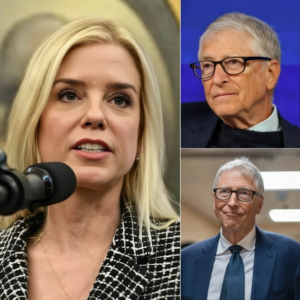
Social media was recently consumed by a viral post asserting that former Florida Attorney General Pam Bondi is investigating Bill Gates over an alleged $1.3 billion COVID-19 vaccine fraud. The dramatic language quickly fueled speculation and widespread debate, further claiming Gates had been indicted by a grand jury and faced imminent arrest. These sensational pronouncements demanded immediate factual verification against established legal and journalistic standards, given the magnitude of the accusations and the high-profile individuals involved.
Crucially, a thorough examination of public records reveals a complete absence of evidence supporting these claims. As of this analysis, no official court records, federal announcements, or verified law enforcement statements corroborate any indictment against Gates related to COVID-19 vaccine funding. Legal experts consistently emphasize that grand jury indictments are formal proceedings that generate accessible, documented filings within judicial systems, none of which exist in this instance. The lack of any such documentation immediately undermines the viral post’s central assertions.
The viral post also fundamentally misunderstands legal jurisdiction. Pam Bondi, despite her previous role as Florida’s attorney general, currently possesses no federal prosecutorial authority. Investigations into alleged federal financial fraud involving vaccine programs would unequivocally fall under the purview of the Department of Justice (DOJ), the principal federal investigative and prosecutorial arm. Furthermore, Bondi has not publicly announced any investigation targeting Gates, suggesting her name’s inclusion is likely a tactic for political branding rather than a reflection of documented legal action or official proceedings.
Central to the fraud claim is the assertion that taxpayer money funded vaccines described as “useless and dangerous,” a characterization sharply contradicting broad scientific consensus on COVID-19 vaccine safety and effectiveness. During the pandemic’s height, governments globally funded vaccine development and distribution. While side effects are documented and studied, regulators consistently found vaccine benefits outweighed risks during peak transmission periods. The post’s claim directly challenges established public health agency data and expert medical opinions supported by extensive research.
Bill Gates, through his philanthropic endeavors, has long advocated for expanded vaccine access, with his foundation funding significant research and distribution efforts globally, particularly in developing nations. While critics question the influence of private philanthropy on public health policy, raising concerns about agenda-setting, supporters argue his funding expedited vaccine availability during an unprecedented crisis. This historical context highlights Gates’ established role in global health, often making him a focal point for scrutiny and rumor, regardless of specific allegations.
The viral post’s lack of credibility is further underscored by its failure to provide any specific documentary evidence, such as case numbers, court jurisdictions, or identified investigative bodies. Misinformation researchers note that emotionally charged headlines, utilizing phrases like “breaking news” and “about to be arrested,” are typical strategies to exploit public frustration about pandemic policies and maximize online engagement. Such tactics prioritize virality and sensationalism over factual accuracy, preying on strong emotional responses rather than presenting verifiable facts.
Legal scholars stress that accusations of criminal conduct, especially those alleging intentional fraud and the distribution of harmful products, demand substantial proof and extensive evidentiary documentation for any formal prosecution. This would include clear evidence of intent, unlawful diversion of funds, and specific transactions. In contrast, public health agencies worldwide continue to publish and update comprehensive safety data on authorized COVID-19 vaccines, ensuring transparency and ongoing monitoring through robust surveillance systems.
Established legal and financial oversight processes further contradict the viral claims. Grand jury proceedings are typically confidential until formal charges are filed, making unverified rumors of indictments speculative and unreliable. Financial records for pandemic spending, which reached hundreds of billions, underwent rigorous oversight by multiple entities, including Congressional committees and independent auditors. No audit has ever concluded that Gates personally misappropriated vaccine funds, with funding primarily structured through government-pharmaceutical contracts.
The emergence of these claims fits a pattern of recurring conspiracy theories involving Gates that have circulated since the pandemic’s onset, including debunked narratives about microchips. The broader debate over pandemic response policies, encompassing vaccine mandates and emergency funding, remains politically sensitive, often generating intense ideological disagreement. It is crucial to distinguish between legitimate critiques of policy effectiveness or oversight and unsubstantiated criminal accusations, which tend to thrive in polarized information environments.
The dissemination of unverified claims carries significant consequences, including the erosion of public trust in institutions and widespread confusion regarding complex health science. The Department of Justice maintains publicly searchable press releases detailing major prosecutions; none, as of now, reference Gates in connection with COVID-19 vaccine fraud. Experts urge individuals to verify dramatic claims through official court records or reputable news outlets. Without corroboration from primary sources, the viral assertion remains unequivocally unverified, purely speculative, and ultimately a product of online misinformation in digital spaces.