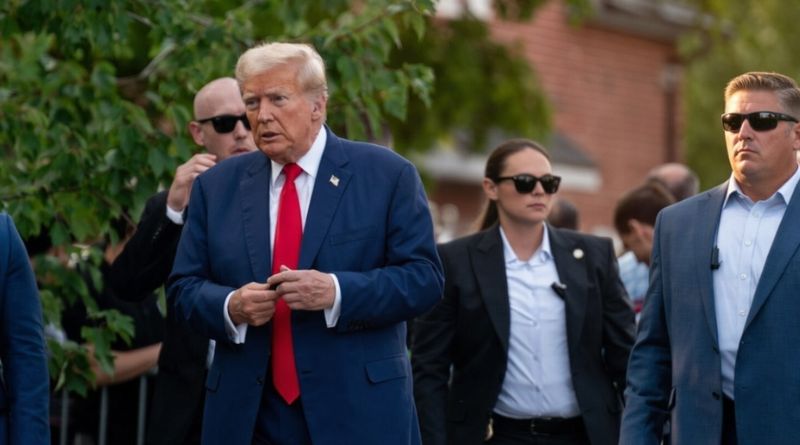
The U.S. Secret Service has significantly elevated its security posture around key federal protection sites, including Mar-a-Lago, amid soaring international tensions. This decisive move comes directly after a joint U.S.–Israeli military offensive against Iran, which has dramatically escalated hostilities in the Middle East. The agency released a statement affirming its close monitoring of regional developments and robust coordination with federal and local law enforcement partners. It emphasized the adaptive nature of its protective model, designed to meet current security needs and safeguard protectees, protected locations, and surrounding communities. The offensive saw U.S. and Israeli forces targeting Iranian military and leadership sites, with unconfirmed reports indicating the death of Iranian Supreme Leader Ayatollah Ali Khamenei. In retaliation, Iran launched its own missile and drone strikes against U.S. and Israeli targets within the region, amplifying the global security concerns.
Although U.S. officials have not publicly identified specific domestic threats directly linked to the overseas military operations, federal agencies routinely adjust protective measures during periods of heightened geopolitical instability. This is particularly true when current or former presidents are involved in significant military decision-making. The Secret Service, while declining to detail specific protective steps for operational security reasons, indicated that the public should anticipate an increased law enforcement presence near sites under federal protection. Any temporary disruptions to traffic or pedestrian access will be communicated through local law enforcement. Mar-a-Lago, the private club and residence of former President Donald Trump in Palm Beach, Florida, remains a high-profile security asset, especially when Trump is present, making it a focal point for these enhanced security protocols.
The decision to enhance security also follows a recent, alarming security breach at Mar-a-Lago itself earlier this month. In the early hours of February 23, an armed individual, later identified as 21-year-old Austin Tucker Martin from North Carolina, unlawfully entered the property’s secure perimeter. Confronted by Secret Service agents and a Palm Beach County sheriff’s deputy, Martin reportedly refused commands to drop his weapons, which included a gas can and a shotgun. According to Palm Beach County Sheriff Ric Bradshaw, Martin put down the gas can but then raised the shotgun to a firing position, prompting agents and the deputy to discharge their weapons and neutralize the threat. Martin was killed, and authorities are still investigating the motive for the breach. This incident adds to a series of security challenges involving President Trump, including two assassination attempts during his 2024 campaign, one near his West Palm Beach golf club and another at a rally in Butler, Pennsylvania, underscoring the persistent threats faced by protected individuals.