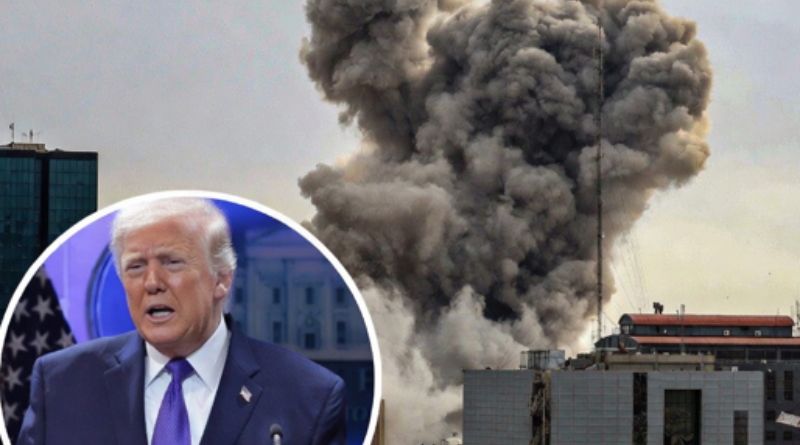

As military tensions rise across the Middle East amid an intensifying confrontation involving the United States, Israel, and Iran, the U.S. Department of State has issued a sweeping travel advisory urging American citizens to leave multiple countries in the region while commercial travel options remain available.
The warning—one of the most urgent travel advisories issued in recent years—comes as the region faces a rapidly evolving security situation marked by military strikes, retaliatory attacks, and increasing uncertainty about the stability of regional infrastructure and transportation networks.
U.S. officials say the advisory reflects growing concern that the situation could deteriorate quickly, placing civilians and foreign nationals at increased risk.
Escalating Conflict Drives Safety Concerns
The State Department’s warning follows a significant escalation in hostilities in the Middle East. The current crisis has included major U.S. and Israeli strikes on targets inside Iran, followed by Iranian missile and drone attacks aimed at military and strategic locations across the region.
These developments have heightened fears within the U.S. government that the conflict could expand further, potentially affecting civilian populations and international travelers.
Officials have emphasized that the situation remains highly volatile, with the possibility of sudden changes in security conditions. Missile strikes, drone activity, and shifting military operations have raised concerns about the safety of airports, transportation routes, and densely populated areas.
In response to these risks, the State Department updated its travel guidance in early March 2026, advising Americans to depart certain countries in the Middle East as soon as it is safe to do so.
Purpose of the Travel Advisory System
Travel advisories are a standard tool used by the U.S. Department of State to provide safety guidance to Americans traveling or living abroad.
These advisories are based on factors such as armed conflict, civil unrest, crime, terrorism risks, and natural disasters. Their purpose is to help U.S. citizens make informed decisions about international travel and residence.
In this case, the advisory was strengthened due to the sudden escalation of regional conflict and the risk of disruptions to transportation systems.
Officials warned that airspace closures, airline cancellations, and broader instability could make leaving the region far more difficult if the situation worsens.
As a result, Americans currently in affected countries are being encouraged to depart immediately using any available commercial transportation.
Countries Included in the Warning
The advisory applies to a wide range of countries and territories across the Middle East, reflecting the interconnected nature of the region’s transportation and security environment.
Countries and territories included in the warning are:
-
Bahrain
-
Egypt
-
Iran
-
Iraq
-
Israel
-
West Bank and Gaza
-
Jordan
-
Kuwait
-
Lebanon
-
Oman
-
Qatar
-
Saudi Arabia
-
Syria
-
United Arab Emirates
-
Yemen
While not all of these locations are experiencing the same level of immediate danger, officials say the widespread advisory reflects the potential for rapid spillover effects if the conflict expands.
In many cases, the message to Americans includes the urgent instruction to “Depart Now,” a phrase that signals serious concern about civilian safety even when a formal evacuation order has not yet been issued.
Government Personnel Departures Signal Rising Risk
Another factor contributing to the advisory is the decision by the U.S. government to reduce the presence of diplomatic staff in several countries.
In early March 2026, the State Department ordered certain non-emergency government employees and family members of U.S. personnel to leave posts in parts of the region.
Such measures are typically taken only when officials believe security risks have risen significantly.
For example, non-essential staff and families were ordered to depart the United Arab Emirates due to concerns about the potential for armed conflict.
Similar departure orders were issued or extended for several other countries, including Qatar, Kuwait, Bahrain, Iraq, and Jordan.
Additionally, the temporary closure of major U.S. diplomatic facilities—including the U.S. Embassy in Abu Dhabi and the U.S. Consulate General in Dubai—illustrates how contingency plans have been activated in response to the unfolding crisis.
These moves are often interpreted as a signal that governments anticipate possible escalation or instability.
Secretary of State Emphasizes Protection of Americans
U.S. Secretary of State Marco Rubio has underscored that the travel advisory is part of a broader effort to ensure the safety of American citizens abroad.
In public remarks, Rubio reiterated that protecting Americans overseas remains the top priority of the U.S. government.
Officials are encouraging citizens to closely monitor communications from U.S. embassies and consulates and to enroll in the Smart Traveler Enrollment Program (STEP), which allows the government to send alerts and provide assistance during emergencies.
Americans in the region are also advised to take several precautionary steps, including:
-
Following local government safety guidance
-
Staying updated through embassy or consulate channels
-
Avoiding demonstrations, military facilities, and conflict-related sites
-
Preparing travel plans before commercial options become unavailable
Air Travel Disruptions Complicate Departures
One of the major challenges facing Americans in the region is the growing disruption to commercial air travel.
Airspace closures, military activity, and safety concerns have forced many airlines to suspend or reroute flights across the Middle East.
Airports that normally function as major international hubs—including several in the United Arab Emirates—have limited operations or temporarily closed as a precaution amid reports of missile and drone threats targeting infrastructure.
Flight tracking services have reported thousands of cancellations across the region’s airports.
These disruptions are not limited to travelers within the Middle East. Many international routes connecting Europe, Asia, and Africa have also been affected due to restricted airspace.
For travelers attempting to leave the region, these challenges mean that flights may be scarce, expensive, or suddenly canceled.
Some individuals have begun seeking alternative departure options such as charter flights, land border crossings, or flights departing from nearby third-country airports.
Americans in the Region Face Uncertainty
Hundreds of thousands of U.S. citizens live and work throughout the Middle East as expatriates, students, military contractors, and business travelers.
Many now face difficult decisions as they weigh the risks of remaining in place against the logistical challenges of leaving.
Reports from travelers and residents describe packed flights, rapidly rising ticket prices, and uncertainty about future travel options.
Some Americans have managed to secure flights out of the region, while others have chosen to shelter in place while awaiting further guidance from their embassy or consulate.
The wide geographic scope of the advisory—covering more than a dozen countries—highlights how interconnected the region’s travel networks are, making large-scale departures complicated when instability spreads.
Concerns About Conflict Duration
Adding to the uncertainty are comments from President Donald Trump suggesting that the broader conflict with Iran could last longer than initially expected.
Speaking during a ceremony honoring U.S. service members killed in an Iranian retaliatory strike, the president indicated that military operations could continue for weeks or potentially longer.
While these remarks did not directly alter the official travel advisory, they reflect the broader uncertainty surrounding the conflict’s trajectory and how long tensions may remain elevated.
Understanding Travel Advisory Levels
The State Department uses a four-tier advisory system to help Americans evaluate travel risks.
-
Level 4: Do Not Travel — The highest warning, typically issued for active conflict zones or areas with severe security threats. Iran and Iraq currently fall under this category.
-
Level 3: Reconsider Travel — Indicates significant risks such as terrorism, civil unrest, or military activity.
-
Level 2: Exercise Increased Caution — Advises travelers to remain alert due to elevated risks such as crime.
-
Level 1: Exercise Normal Precautions — The lowest level of advisory.
Several Middle Eastern countries are currently classified at Level 3 or Level 4 due to the escalating conflict.
Steps Americans Should Take
U.S. officials advise citizens currently in the region to take proactive measures to ensure their safety.
Key recommendations include enrolling in the Smart Traveler Enrollment Program, monitoring embassy communications for updates, and making travel arrangements as early as possible.
Americans needing assistance can also contact the State Department’s 24-hour emergency lines for support.
Because transportation options and security conditions can change quickly during a crisis, officials stress the importance of acting early rather than waiting until travel becomes more difficult.
A Critical Moment for Travelers
The State Department’s advisory underscores how quickly international travel conditions can change when military conflict intensifies.
By urging Americans to leave affected countries while commercial flights remain available, U.S. officials hope to reduce the risks faced by civilians caught in an increasingly unstable region.
As the situation continues to develop, Americans in the Middle East are being urged to stay informed, remain cautious, and prepare for possible rapid changes in the security environment.
For now, the message from U.S. authorities is clear: depart while it is still possible to do so safely.