
A recent Supreme Court decision limiting President Donald Trump’s use of sweeping tariff powers under the International Emergency Economic Powers Act (IEEPA) may not completely prevent the administration from imposing tariffs, according to legal analysts. While the ruling blocks the use of IEEPA for broad global tariffs, experts say other laws could still give the president narrower authority to implement certain trade measures.
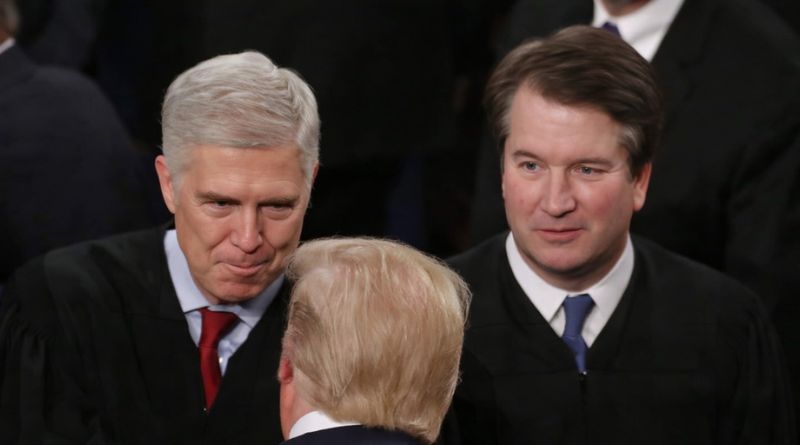
Elliot Williams, a CNN legal analyst and former deputy assistant attorney general during the Obama administration, discussed the issue on The Bulwark’s “Illegal News” podcast. Williams explained that although the Court rejected Trump’s attempt to rely on IEEPA, Justice Brett Kavanaugh’s dissent outlined other legal pathways the president might use to impose tariffs under more limited conditions.
According to Williams, Kavanaugh’s dissent essentially suggested a “roadmap” for how tariffs might still be implemented. The justice pointed to several existing statutes that allow a president to impose tariffs in specific circumstances. These include the Trade Expansion Act of 1962, the Trade Act of 1974, and the Tariff Act of 1930.
However, these laws come with important restrictions. Tariffs imposed under these statutes are generally temporary, involve lower maximum rates than those previously proposed by Trump, and require the administration to provide detailed findings explaining why the tariffs are necessary. In his dissent, Kavanaugh argued that the main issue in the case was not whether tariffs were permissible, but rather that the administration relied on the wrong legal authority when using IEEPA.
Following the decision, Trump praised Kavanaugh’s dissent and indicated that his administration would continue pursuing tariffs through alternative legal provisions. The administration has already begun moving forward with plans to use Section 122 of the Trade Act as a new basis for tariffs.
Still, Williams emphasized that without IEEPA, the president cannot impose tariffs with the same speed or scope as before. He compared the situation to someone winning a luxury car but then being forced to drive an older, worn-down model instead. In other words, the remaining legal tools provide far less flexibility.
Williams added that the kinds of sweeping tariffs Trump promoted during his campaign and attempted to introduce earlier in 2025 would likely be impossible to replicate under the more limited statutes. During his State of the Union address, Trump acknowledged the Supreme Court ruling but said his administration would maintain its tariff policy by relying on other legal authorities. He also repeated his claim that tariff revenue could eventually replace federal income taxes.
Legal experts note that the administration’s current approach faces another obstacle. Section 122 of the Trade Act only allows tariffs to remain in effect for 150 days, making it a temporary solution. Congress has also signaled that it is unlikely to approve an extension once that period expires.
Unless the administration finds a way to extend the tariffs independently or identifies another legal pathway, officials may need to pursue additional options. U.S. Trade Representative Jamison Greer said the administration plans to continue its trade strategy by relying on other authorities granted by Congress. He emphasized that although the Court rejected one part of the tariff program, several other legal mechanisms remain available.